
The short answer: yes, and winter is when it shows
Yes, mice commonly come inside houses in winter in Michigan. When temperatures drop, the house mouse looks for three things: warmth, a steady food source and a protected place to nest. A heated home with a pantry, a garage and quiet spaces inside the walls checks every box.
Most mice actually start moving in during the fall, as nights get colder. Many homeowners don't notice until winter, when the mice have settled in, started nesting and begun leaving droppings, noises and gnaw marks behind. If you're hearing scratching in the walls in January, the mice likely arrived weeks earlier. Our guide on why mice enter Michigan homes in the fall covers that early part of the season.
Why do mice come inside Michigan homes during winter?
Mice don't hibernate. They stay active all winter, and they need to eat often to keep warm. Outdoors, snow cover, frozen ground and fewer seeds make food harder to reach, and exposed nests lose heat quickly. Inside, a house gives them a stable temperature and easy meals.
- Warmth: insulation, wall voids and spaces near furnaces and water heaters stay warm all season.
- Food: pantry goods, crumbs, pet food, birdseed and garbage are easy to find.
- Shelter: attics, basements, garages and cabinets give mice dark, quiet places away from predators.
- Water: leaky pipes, condensation and pet bowls provide what they need to drink.
How do mice get into houses?
A mouse can squeeze through a gap about the size of a dime, or roughly the width of a pencil. Most homes have several openings like that, even well-built ones. These are the entry points we find most often during inspections:
- Gaps around pipes, cables, dryer vents and air conditioner lines where they enter the house
- Garage doors with worn or torn bottom seals, and the gap where the garage meets the house
- Worn door sweeps and weatherstripping on exterior doors
- Cracks in the foundation and gaps along the sill plate
- Openings at the roofline, soffits, gable vents and where the roof meets the wall
- Unscreened crawl space and basement vents, and gaps around basement windows
Why the garage matters so much
In many Michigan homes, the attached garage is the first stop. Doors get opened all day, seals wear out, and items like birdseed, grass seed and stored boxes give mice food and cover. From there, they follow pipes and gaps into the main house.
Where do mice hide inside Michigan homes?
Once inside, mice stay close to food and travel along walls rather than across open floors. They prefer spots that are dark, warm and rarely disturbed.
Mice in the walls during winter
Wall voids are one of the most common nesting spots. Insulation makes good bedding, and pipes and wires give mice routes between floors. Scratching or light scurrying in the walls at night, especially near the kitchen or bathroom, is a common sign.
Mice in the attic during winter
Heat rises, so attics can stay comfortable for mice even in cold weather. Look for droppings on top of insulation, tunnels or flattened areas in the insulation, and nesting material near the eaves.
Kitchens, basements and garages
Other favorite spots include behind and under the stove and refrigerator, inside lower cabinets, under the dishwasher, in basement storage boxes, near the furnace and water heater, and in cluttered corners of the garage.
Signs you may have mice in your house
You may never see a live mouse. Most homeowners find the evidence first. For a full breakdown, see our 9 signs you have mice in your Michigan home.
Seeing signs of mice in your Michigan home?
Talk to Broner Pest Control about the mouse activity you're seeing and the next steps for your home.
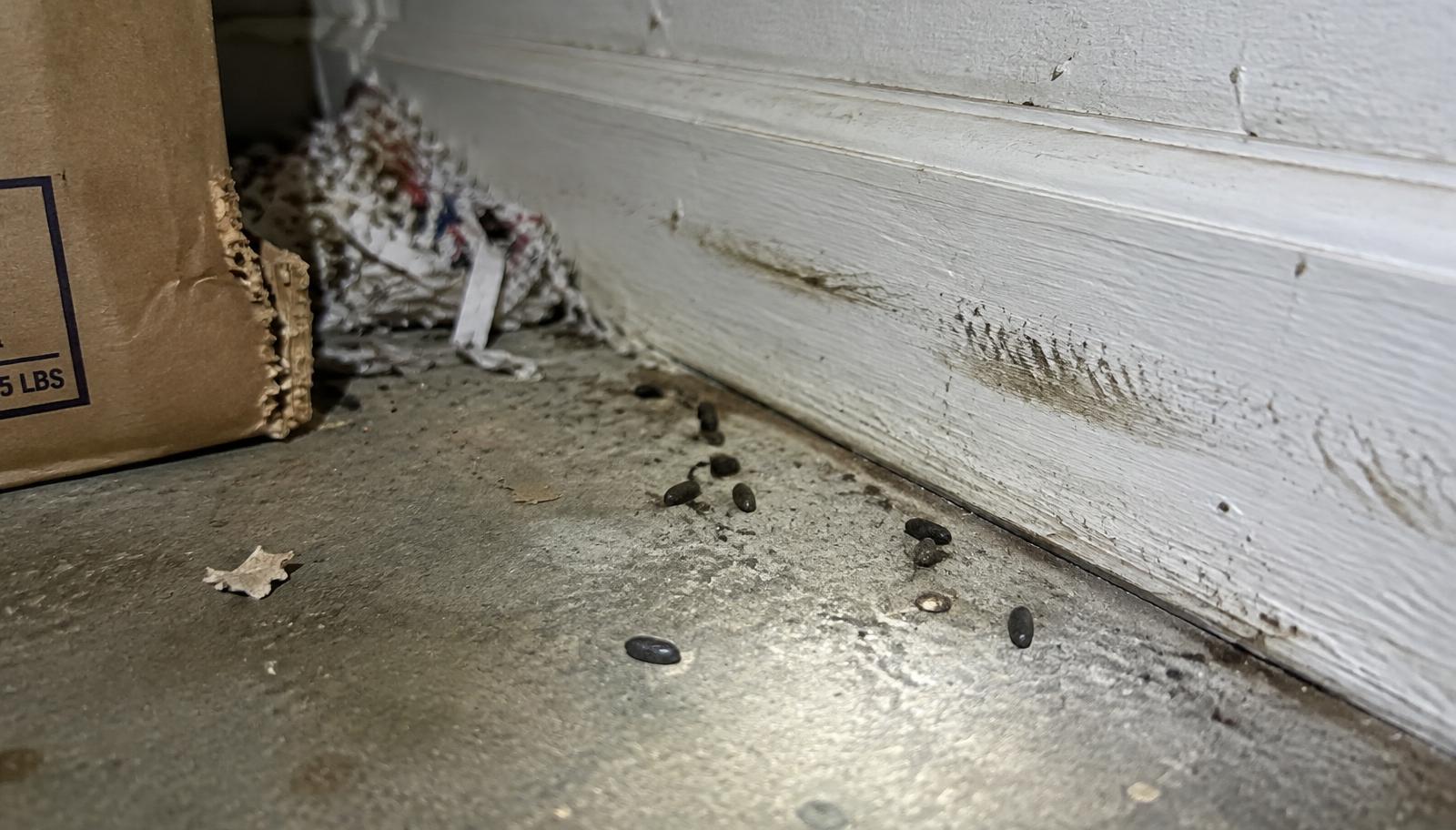
Call 734-608-3435Request an Inspection- Small dark droppings, about the size of a grain of rice, in cabinets, drawers or along baseboards
- Scratching or scurrying sounds in walls or ceilings, often at night
- Chewed food packaging, especially cereal, pasta, rice and pet food
- Gnaw marks on wood, plastic, wiring or cardboard
- Shredded paper, fabric or insulation gathered into a nest
- Dark rub marks along walls where mice travel the same path
- A musty, stale odor in enclosed spaces like cabinets or closets
- Pets staring at, sniffing or pawing at one spot on a wall or appliance
Mouse or rat?
Larger droppings, louder noises and bigger gnaw marks may point to rats instead. Our guide on how to tell if you have rats or mice compares the two side by side.
Cleaning up droppings safely
Don't sweep or vacuum mouse droppings, which can stir up dust. The CDC recommends wearing gloves, spraying droppings with a disinfectant or bleach solution, letting it soak, then wiping it up with paper towels and throwing them away.
Why Michigan homes can have more mouse activity in winter
Michigan winters bring long stretches of cold, snow and freezing nights, which is exactly when a heated home matters most to a mouse. A mouse that got inside in October will usually stay until spring if it has food and a place to nest.
Home age and surroundings play a role too. Older homes in communities like Detroit, Dearborn and Redford often have settled foundations, older windows and more gaps around utilities. Newer subdivisions near open land, fields or wooded areas, in places like Canton and Novi, can see mice move in from surrounding green space as the weather turns.
Mice also breed indoors through the winter. A few mice in November can become a larger problem by February if the entry points and nesting areas aren't addressed.
How to keep mice out of your house
The best time to mouse-proof a home is late summer or early fall, but it's never too late. Focus on closing the way in and removing what draws them.
- Seal gaps around pipes, wires and vents with steel wool or copper mesh plus caulk or sealant. Mice can chew through foam and plastic alone.
- Replace worn door sweeps and garage door bottom seals.
- Cover vents and crawl space openings with sturdy hardware cloth.
- Store pantry food, pet food and birdseed in sealed glass, metal or thick plastic containers.
- Keep garbage in lidded bins and clean up crumbs, especially under appliances.
- Reduce clutter in basements, closets and garages, and store items off the floor.
- Keep firewood, mulch and dense shrubs away from the foundation.
Why traps alone often fall short
Catching one mouse doesn't solve the problem if the opening it used is still there. More mice can follow the same path. Traps work best as part of a plan that also finds and closes entry points. If you want to understand your options, our guide on how to get rid of mice walks through them.
When should you call a professional mouse exterminator?
Consider calling a professional if:
Seeing signs of mice in your Michigan home?
Talk to Broner Pest Control about the mouse activity you're seeing and the next steps for your home.
Call 734-608-3435Request an Inspection- You keep finding fresh droppings after cleaning up
- You hear activity in the walls, ceiling or attic
- You've caught several mice and they keep coming
- You can't find how they're getting in
- You see gnawed wiring, damaged insulation or food contamination
- Someone in the home has health concerns, or you have young children or pets
How Broner Pest Control handles winter mice
Broner Pest Control is a residential-focused pest control company with 15 years of experience serving Southeast Michigan homes. Our mouse control service starts with an inspection to find where mice are getting in and where they're active, followed by targeted treatment and recommendations for sealing entry points.
Rodent service is part of our annual agreements: an initial service, followed by four quarterly visits starting 30 days later, with free reservice between visits if activity comes back. Learn more about our broader rodent control in Southeast Michigan, or call 734-608-3435 to schedule an inspection.
Frequently asked questions
Do mice come inside houses in winter in Michigan?
Yes. Mice don't hibernate, and as Michigan temperatures drop they look for warmth, food and shelter. Heated homes provide all three, so many homeowners notice mouse activity in late fall and winter.
Why do mice come into houses when it gets cold?
Cold weather makes outdoor food harder to find and outdoor nests harder to keep warm. Inside a house, mice find stable temperatures, easy food and protected places to nest.
How do mice get inside Michigan homes?
Through small openings, about the size of a dime, around pipes and utility lines, worn door sweeps and garage seals, foundation cracks, vents and gaps along the roofline.
How can I tell if I have mice?
Look for small dark droppings, chewed packaging, gnaw marks, shredded nesting material, rub marks along walls, a musty smell, and scratching sounds in walls or ceilings at night.
Where do mice hide in a house?
Common spots include wall voids, attics, basements, garages, behind and under kitchen appliances, inside lower cabinets, and near furnaces and water heaters.
Can mice get into walls?
Yes. Mice often nest inside wall voids, using insulation as bedding and pipes or wires to move between floors. Scratching sounds in the walls at night are a common sign.
How do I keep mice out of my house?
Seal gaps with steel wool or copper mesh and sealant, replace worn door sweeps and garage seals, store food in sealed containers, reduce clutter, and keep firewood and mulch away from the foundation.
When should I call a mouse exterminator?
Call a professional if droppings keep coming back, you hear activity in walls or the attic, you keep catching mice, you can't find the entry point, or you see damage to wiring or insulation.
Learn more about our mouse control, rodent control, pest inspections, and service areas. Call 734-608-3435 or email info@bronerpest.com to schedule an inspection.
Need help now? See our mouse control and rodent control services for Southeast Michigan homes.