
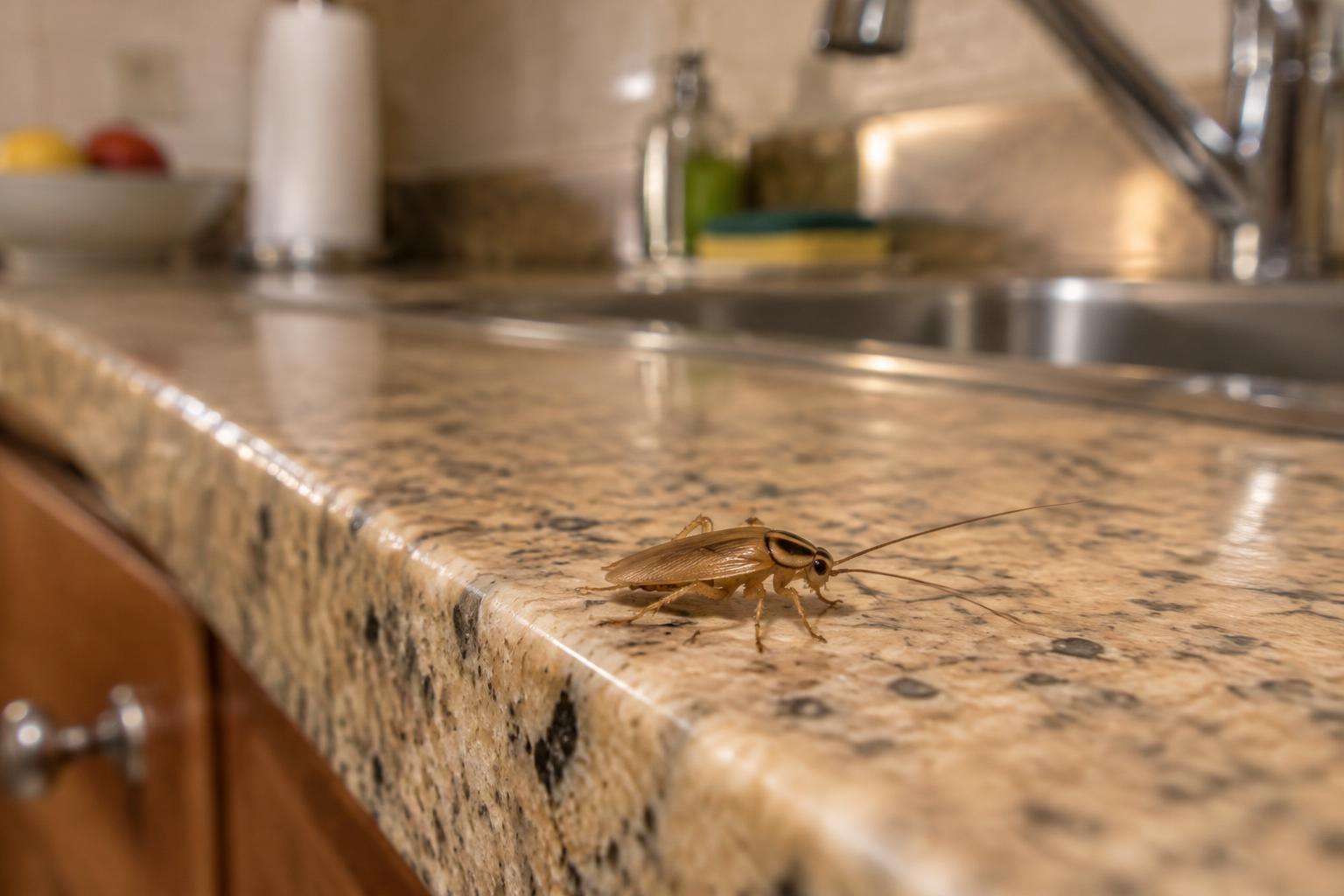
German cockroaches are among the most difficult household pests to eliminate. Unlike many insects that occasionally enter homes from outside, German cockroaches are primarily indoor pests that establish breeding populations inside kitchens, bathrooms, cabinets, appliances, and other warm, protected areas.
For homeowners, renters, landlords, and property managers in Detroit, Michigan, a German cockroach infestation can quickly become a frustrating problem. Seeing one cockroach in your kitchen may indicate that others are hiding nearby. These insects reproduce rapidly, remain concealed during the day, and can spread throughout a property before an infestation becomes obvious.
German cockroaches are particularly challenging because they can reproduce indoors year-round. They don't need to wait for warm outdoor weather to become active, and their ability to hide in extremely small spaces makes locating every infestation area difficult.
Whether you're finding small roaches around your kitchen sink, seeing baby cockroaches inside cabinets, or noticing roaches running across countertops at night, understanding the infestation is the first step toward eliminating it.
This guide explains why German cockroaches infest Detroit homes, how to identify them, where they hide, how quickly they reproduce, why DIY treatments often fail, and what homeowners should know about professional German cockroach extermination.
What Are German Cockroaches?
The German cockroach (Blattella germanica) is a small, light-brown to tan cockroach species commonly associated with indoor residential and commercial infestations.
Adult German cockroaches typically measure approximately one-half to five-eighths of an inch long. They have two distinctive dark parallel stripes running lengthwise behind their heads.
Unlike larger cockroach species, German cockroaches are particularly adapted to living and reproducing inside buildings.
Common characteristics include:
- Small, tan or light-brown bodies.
- Two dark stripes behind the head.
- Long antennae.
- Flattened bodies that allow them to hide in narrow spaces.
- Rapid reproductive cycles.
- Preference for warm, humid environments.
- Primarily nighttime activity.
Why Are German Cockroaches Such a Problem in Detroit?
German cockroaches can infest residential properties regardless of their age, cleanliness, or overall condition.
Detroit has a wide variety of residential buildings, including historic houses, older brick homes, apartment buildings, multi-unit properties, renovated residences, and newer construction.
These different building types can present opportunities for cockroaches to establish indoor populations.
1. Apartment Buildings and Multi-Unit Housing
German cockroach infestations can be especially challenging in multi-unit residential buildings.
Cockroaches may travel between connected units through:
- Plumbing penetrations.
- Gaps around pipes.
- Wall voids.
- Shared utility spaces.
- Openings beneath cabinets.
- Electrical and mechanical penetrations.
2. Older Kitchens and Plumbing Connections
Older residential properties may have gaps around plumbing, cabinetry, flooring, and utility connections.
These openings can provide cockroaches with protected hiding places close to food and moisture.
German cockroaches frequently establish harborages behind kitchen cabinets, beneath sinks, and around appliances.
3. Food and Moisture Availability
German cockroaches can survive on surprisingly small amounts of food.
Grease residue, crumbs, food particles, garbage, pet food, and moisture around plumbing fixtures can support an infestation.
Even small amounts of accessible food can help sustain a cockroach population.
4. Cockroaches Brought Inside Through Everyday Items
German cockroaches frequently spread by hitchhiking.
They may enter properties inside:
- Grocery bags.
- Cardboard boxes.
- Used furniture.
- Secondhand appliances.
- Delivery packaging.
- Storage containers.
- Moving boxes.
10 Signs of a German Cockroach Infestation
German cockroaches are excellent at hiding. Many homeowners discover evidence of an infestation before they actually see a large number of live insects.
Here are ten common warning signs.
1. Small Cockroaches Running Across Kitchen Counters
German cockroaches are frequently found around kitchen counters, sinks, cabinets, and appliances.
They are generally more active at night and may scatter when lights are turned on.
2. Baby Cockroaches
Finding small cockroaches can indicate that reproduction is occurring inside the property.
Young German cockroaches, called nymphs, are dark brown to nearly black and often have a lighter marking running down the middle of their backs.
Finding multiple sizes of cockroaches may indicate an established breeding population.
3. Cockroach Droppings
German cockroach droppings can resemble small black specks, ground pepper, or coffee grounds.
They may accumulate around:
- Cabinet hinges.
- Kitchen drawers.
- Behind refrigerators.
- Beneath sinks.
- Appliance motors.
- Pantry shelves.
- Other concealed harborages.
4. Egg Cases
German cockroach females carry their egg cases, called oothecae, for much of the egg-development period.
An egg case is typically brown and elongated.
Finding discarded or hatched egg cases can indicate that cockroaches have been reproducing nearby.
5. Unpleasant Musty Odors
Larger infestations can produce a persistent unpleasant odor caused by accumulated cockroach secretions, droppings, and other biological material.
6. Cockroaches Around Refrigerators
The area behind and underneath refrigerators can provide warmth, moisture, and access to food residue.
These conditions make appliance areas attractive cockroach harborages.
7. Cockroaches Inside Kitchen Cabinets
Cabinets provide dark, protected spaces where cockroaches can hide during daylight hours.
Pay particular attention to hinges, corners, cracks, and areas surrounding plumbing.
8. Cockroaches Around Dishwashers
Moisture and warmth around dishwashers can create favorable conditions for German cockroaches.
Inspect accessible areas around the appliance and nearby cabinetry.
9. Cockroaches in Bathrooms
Although kitchens are common infestation locations, German cockroaches can also establish themselves in bathrooms where moisture is available.
Check beneath sinks, around plumbing, and inside bathroom storage areas.
10. Seeing Cockroaches During the Day
German cockroaches are primarily nocturnal.
Seeing them during daylight hours can indicate that hiding spaces are crowded or that the infestation is substantial, although other conditions can also cause daytime sightings.
How Quickly Do German Cockroaches Reproduce?
One of the biggest reasons German cockroaches are difficult to eliminate is their reproductive potential.
A female German cockroach produces egg cases containing approximately 30 to 40 eggs, although the exact number varies.
The female typically carries the egg case until shortly before the eggs hatch.
Under favorable conditions, German cockroaches can develop rapidly and reproduce indoors throughout the year.
Their reproductive ability means a small infestation can grow substantially if left untreated.
This is why seeing a few baby cockroaches in a kitchen should not automatically be dismissed as an isolated problem.
When nymphs, adults, droppings, and egg cases are present together, it may indicate an established breeding population.
Where Do German Cockroaches Hide Inside Detroit Homes?
German cockroaches prefer warm, dark, protected locations near food and moisture.
Unlike larger cockroach species that may frequently enter through exterior openings, German cockroaches commonly establish themselves in concealed areas inside buildings.
Common hiding locations include:
Behind Refrigerators
The warmth and protected spaces around refrigerator motors can provide suitable harborages.
Inside Kitchen Cabinets
Cabinet corners, hinges, and gaps around plumbing can conceal cockroaches.
Under Kitchen Sinks
Moisture, plumbing penetrations, and dark spaces make this a common inspection area.
Behind Stoves
Food residue, grease, and warmth can attract cockroaches.
Inside Dishwashers
Accessible gaps and surrounding cabinetry may provide favorable hiding locations.
Around Microwaves and Small Appliances
Warm equipment and food residue can contribute to cockroach activity.
Inside Bathroom Vanities
Plumbing openings and moisture can create suitable conditions.
Inside Wall Voids
Cockroaches may travel through concealed openings around plumbing and utilities.
Around Laundry Equipment
Warmth and moisture around washers and dryers can provide additional hiding opportunities.
Are German Cockroaches Dangerous?
German cockroaches can create unsanitary conditions and contribute to several health concerns.
Food Contamination
Cockroaches travel through garbage, drains, contaminated surfaces, and other unsanitary environments.
They can transfer microorganisms onto food preparation surfaces, utensils, and stored food.
Allergies and Asthma
Cockroach droppings, saliva, shed skins, and body fragments can contribute to indoor allergens.
Exposure may aggravate allergies and asthma, particularly in sensitive individuals.
Bacterial Contamination
Cockroaches can carry microorganisms on their bodies and may contaminate surfaces as they move throughout a property.
Unsanitary Living Conditions
As infestations increase, droppings, shed skins, egg cases, and dead insects can accumulate in concealed areas.
Addressing an infestation is important for maintaining a sanitary residential environment.
Why Store-Bought Cockroach Sprays Often Fail
Many Detroit homeowners initially attempt to eliminate German cockroaches using aerosol sprays, supermarket insecticides, and other readily available products.
Although some products can kill individual cockroaches, spraying visible insects does not necessarily eliminate the breeding population.
There are several reasons DIY treatments may fail.
Cockroaches Hide in Inaccessible Areas
German cockroaches spend much of their time inside narrow cracks, appliance compartments, cabinet joints, and other concealed spaces.
Spraying visible areas may leave the primary harborages untreated.
Egg Cases May Remain
Some treatments may kill exposed insects without adequately addressing developing eggs or newly emerging nymphs.
Follow-up monitoring and treatment may be necessary.
Improper Insecticide Use
Applying insecticides incorrectly can expose occupants to unnecessary risks.
Some aerosol or repellent products can also interfere with bait placement and effectiveness.
Cockroach Resistance
Certain German cockroach populations have developed resistance to commonly used insecticides.
Resistance can make repeated use of the same active ingredient ineffective.
Multiple Infestation Locations
Cockroaches may be hiding in several rooms, appliances, or connected areas of a building.
Treating only the kitchen counter or one cabinet may not address the entire infestation.
How Professional German Cockroach Extermination Works
Effective German cockroach extermination requires identifying the infestation, locating harborages, selecting appropriate treatment methods, and monitoring results.
A professional treatment approach may involve several components.
1. Inspection and Identification
The first step is determining whether the infestation involves German cockroaches and identifying the areas where activity is concentrated.
Inspection may include kitchens, bathrooms, cabinets, appliance areas, plumbing penetrations, and other accessible locations.
2. Targeted Gel Bait Applications
Professional cockroach management commonly uses carefully placed gel baits in appropriate locations.
Cockroaches consume the bait and can contribute to population reduction as treatment takes effect.
Bait placement is important because the product must be accessible to cockroaches while remaining protected from contamination and unintended contact.
3. Insect Growth Regulators
Insect growth regulators, or IGRs, may be used as part of an integrated treatment program.
These products interfere with normal insect development and reproduction.
They are not necessarily immediate knockdown products, but they can help manage developing populations.
4. Crack and Crevice Treatments
Appropriate treatment of cracks, crevices, and concealed harborages may help address cockroach activity in areas where insects commonly hide.
5. Monitoring and Follow-Up
Cockroach infestations may require additional monitoring and treatment.
The effectiveness of a treatment program depends on infestation severity, access to harborages, product selection, sanitation, and whether cockroaches continue entering from untreated areas.
Why German Cockroaches Are Especially Difficult in Apartment Buildings
German cockroach control can become more complicated when multiple residential units are connected.
Treating one apartment without addressing nearby sources may result in recurring activity.
Cockroaches can move through plumbing penetrations, shared wall spaces, utility openings, and other structural connections.
Property managers should consider coordinated inspections and treatment when infestations are reported in multiple units.
Tenants should also report recurring cockroach activity promptly rather than assuming the problem is limited to their individual apartment.
Effective multi-unit pest management may require cooperation between residents, property management, and pest control professionals.
How to Prevent German Cockroaches From Returning
Preventing future cockroach activity requires eliminating the conditions that allow infestations to develop.
Here are several practical steps.
Professional German cockroach control for Detroit homes.
Talk to Broner Pest Control about the pest activity you're seeing and the next steps for your home.
Call 734-608-3435Request an Inspection- Store food in tightly sealed containers.
- Clean food crumbs and grease from kitchen surfaces.
- Avoid leaving dirty dishes overnight.
- Empty garbage regularly.
- Keep pet food stored securely.
- Repair leaking faucets and plumbing connections.
- Reduce unnecessary cardboard storage.
- Inspect grocery bags and delivered packaging.
- Inspect secondhand appliances and furniture before bringing them indoors.
- Seal appropriate gaps around plumbing and utility penetrations.
- Keep cabinets and storage areas organized.
- Report recurring cockroach activity in multi-unit buildings.
When Should You Call a German Cockroach Exterminator in Detroit?
There are several situations where professional assistance may be appropriate.
Consider contacting a pest control professional if:
- You repeatedly see small cockroaches in your kitchen.
- You discover baby cockroaches in cabinets.
- You find cockroach droppings in multiple areas.
- You discover egg cases.
- Cockroaches are appearing during daylight hours.
- Store-bought products aren't resolving the infestation.
- Cockroaches continue appearing after previous treatments.
- You suspect activity in multiple apartments or connected units.
Final Thoughts: Getting Rid of German Cockroaches in Detroit
German cockroaches are not ordinary occasional household pests. Their ability to reproduce rapidly, hide in extremely small spaces, and establish indoor breeding populations makes them particularly difficult to eliminate.
From kitchen cabinets and appliances to bathrooms, plumbing openings, and connected apartment units, these insects can establish themselves in numerous areas throughout a residential property.
Recognizing the early warning signs, understanding how infestations develop, and using appropriate control methods are important steps toward eliminating German cockroaches.
If you're dealing with recurring cockroach activity, baby roaches, or an infestation that isn't responding to store-bought products, professional pest control may be the next step.
Broner Pest Control provides residential pest control services, including professional German cockroach control and general pest control. With 15 years of pest control experience, our goal is to help homeowners address unwanted pest activity and protect their properties. If you're experiencing a German cockroach infestation in Detroit, Michigan, contact Broner Pest Control to discuss your situation, or call 734-608-3435.
Frequently asked questions
What is the fastest way to get rid of German cockroaches?
Effective control generally requires identifying the infestation, locating hiding areas, using appropriate treatments such as gel baits, and monitoring results. The correct approach depends on the size and location of the infestation.
Why do I have German cockroaches if my house is clean?
German cockroaches can infest clean homes. They may enter through grocery bags, boxes, appliances, deliveries, or connected building spaces. Sanitation helps reduce food availability but does not guarantee prevention.
Are German cockroaches the same as water bugs?
No. German cockroaches are a distinct species. The term water bug is often used informally to describe larger cockroaches, particularly American cockroaches, but these insects have different characteristics and habits.
Why am I seeing baby German cockroaches?
Baby cockroaches are called nymphs. Finding them can indicate that cockroaches are reproducing inside your home or nearby.
Can German cockroaches live inside refrigerators?
They generally don't live inside the refrigerated compartment, but they may establish harborages behind or underneath refrigerators where warmth, food residue, and concealed spaces are available.
Can German cockroaches spread between apartments?
Yes. They can move between connected units through plumbing openings, utility spaces, wall voids, and other structural gaps.
Do German cockroaches go away in winter?
No. German cockroaches are primarily indoor pests and can remain active and reproduce inside heated buildings throughout the winter.
How long does German cockroach extermination take?
The timeline depends on the severity of the infestation, treatment methods, sanitation conditions, and whether additional treatment is required. Established infestations may require multiple visits and continued monitoring.
Can cockroach spray make an infestation worse?
Some repellent products can cause cockroaches to avoid treated areas or interfere with bait placements. Improper insecticide use can also create unnecessary exposure risks. Always follow product labels and professional recommendations.
Are German cockroaches attracted to water?
Yes. German cockroaches need moisture to survive and frequently gather around sinks, leaking pipes, drains, and other damp areas.
Can German cockroaches survive without food?
German cockroaches can survive for a period without food, but they require water more frequently. Removing accessible food and moisture can help make an environment less favorable.
Who should I call for German cockroach extermination in Detroit?
Detroit homeowners, tenants, and property managers experiencing German cockroach activity can contact Broner Pest Control to discuss professional residential pest control services.
Learn more about our home page, German cockroach control, general pest control, and pest control in Detroit. Call 734-608-3435 or email info@bronerpest.com to schedule an inspection.
Need help now? See our german cockroach control and general pest control services for Southeast Michigan homes.